Showing posts with label buy. Show all posts

Thursday, September 13, 2018

Apple iPhone XR First impressions

Apple is making a habit of launching “one more” iPhone every year. It did that with the iPhone X in 2017 and this year it’s the iPhone XR which fell into that category. What’s remarkable is that it’s very rare when the cheapest iPhone of the year catches the maximum attention. But that’s exactly what the iPhone XR has managed to do at the 2018 iPhone launch event. Even in the demo area of the Steve Jobs theatre, it attracted the maximum curiosity. Why? Read our first impressions to know:


Design

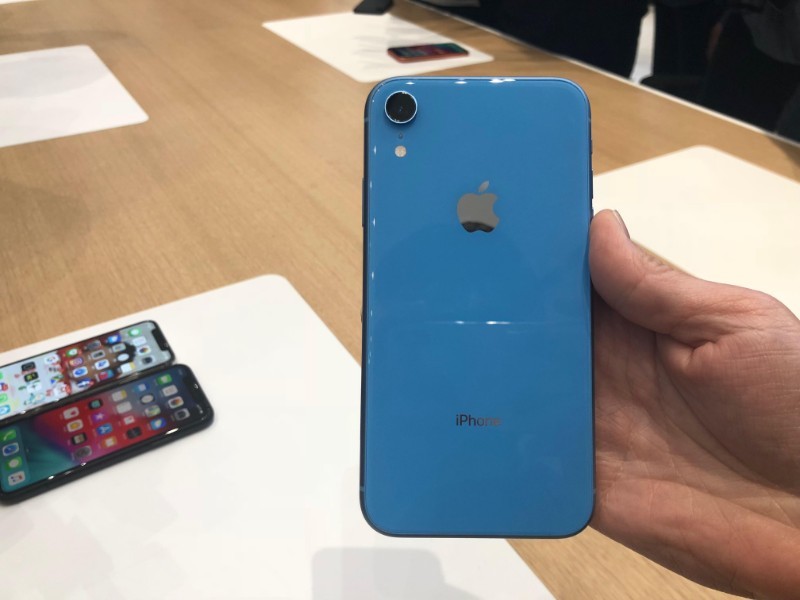
The first thing you’ll notice about the iPhone XR are the plethora of colour options it comes in. Apple has taken a bold step of moving away from its usual palette of colours with the iPhone XR. This phone comes in funky colours like Coral, White, Yellow, Black, Blue and even the Product Red. The Blue and Coral ones certainly stands out the most.

The iPhone XR has an all-screen glass and aluminum design which gives it a sturdy look and feel. The 6.1-inch screen is bigger than the iPhone X. The smartphone is easy to hold and offers a firm grip as well. The iPhone XR is splash and water resistant and comes with a rating of IP67. It retains the design appeal of the iPhone X but gets a nice dash of colour. The last time Apple went bold with colours was with the iPhone 5C. However, this is a more elegant design and the iPhone XR is one good looking smartphone.


Display

The one major difference between the iPhone XS and iPhone XR lies in the display. While the former has an OLED display, Apple has opted for an LCD display for the latter. If you’re thinking that there is a remarkable difference between the two, then yes there is. At least on paper. In reality, the LCD display on iPhone XR is really good. The images look sharp and colour reproduction is top notch. Apple seems to have done a fine job with the LCD display.


Camera and processor

The other difference in the iPhone XR and XS is the camera set up. The iPhone XR comes with a single camera at the back which we couldn’t test in detail. However, the Portraid mode and bokeh effect can be found in the iPhone XR as well. The images clicked on the iPhone XR we saw looked remarkably sharp and clear. Even the depth effect – a strong suit of dual rear cameras – was quite good. The front camera is a 7MP module. You’ll have to wait for our full review to know how the camera of iPhone XR measures against the rest.

As far as the processor is concerned, the iPhone XR is powered by the same A12 Bionic chipset. We fully expect this phone to deliver solid performance on all counts.


What we think

This might just be the best-selling iPhone of the year. Not because of its price alone but because this has all the good parts – well almost all – that the iPhone XS series has. And it costs considerably less, when compared to the iPhone XS. With a price tag of Rs 76,900, this could be the most compelling iPhone buy of the year. The LCD display is nothing to scoff at as it’s really good and it has the same processor as the expensive iPhones. However, it’s early to give a verdict on it but our hunch is that Apple might just have a winner on its hands with the iPhone XR.
Read More

Friday, June 27, 2014

eBay rejects auction of Nazi chief’s car


Auction website eBay has refused to list a World War II-era Mercedes Benz once owned Hermann Goering, a Nazi leader who commanded the German air force, citing a policy prohibiting the sale of offensive items.

The 1941 Mercedes Benz 540 K Cabriolet B, custom built by Daimler-Benz for Adolf Hitler’s close confidant, is currently in pieces in a high-end south Florida automobile shop, where owners said they plan to spend about $750,000 to restore it to working condition.

“We’ve located all the replacement parts and we can make parts,” said High Velocity Classics co-owner David Rathbun.

eBay, however, asked the owners to take down the auction after learning it would go live in early July.

“eBay has policies in place that prohibit the sale of offensive materials and content, which includes listings that promote or glorify hatred, violence or racial, sexual or religious intolerance,” spokesman Ryan Moore wrote in an email.

According to Rathbun, the car was seized by the U.S. Army’s 7th Infantry Division in Berchtesgaden, a town in the Bavarian Alps where Hitler built a sprawling residence.

After the war it became army surplus and was eventually sold by the head of a psychology institution in Heilbronn to Master Sergeant Sam Hosier, who drove it in occupied Germany. Hosier brought it to the United States and in 1955 sold it to a North Carolina man, who owned it until this year.

The owners would not say how much they paid for the car, only that they hope it will sell for $5 million to $7 million.

Another of Goering’s cars, a convertible Mercedes 540 K nicknamed the Blue Goose, was auctioned in 2011 in Italy by Ontario, Canada-based RM Auctions for about $2 million.

The owners lamented having to turn to traditional high-end auto sales auctions to sell the stretch coupe once work is finished.

“eBay is all over the world, it has hundreds of millions of users, and it was the biggest venue anyone could find,” Rathbun said.
Read More

Wednesday, June 25, 2014

Google Glass turning into a fashion accessory; DVF designer collection goes on sale


As promised, the DVF | Made for Glass collection is now up for grabs online. Earlier this year, Google had teamed with DVF, fashion designer Diane von Furstenberg’s studio for its newest range of Google Glass designs. The DVF collection adds five new frames to the Glass, which are up for sale via Google and online fashion retailer Net-a-Porter.

The five new shades and eight frames have been designed especially for women. The frames are available in five colours namely, brown, shiny lagoon, shiny elderberry, matte java and matte ice, and will cost $300 additional, which means the combination will cost $1,800. Meanwhile, the original Titanium Collecion frames are also available on MrPorter for $1650.

Looks like, Google is looking to add the fashion element to its Glass. DVF also took the Glass to New York Fashion week. Google has also partnered with Luxottica, which means Ray-Ban and Oakley-branded frames and shades for the Glass should eventually surface.

DVF shades now available

Moreover, seems Google also plans to take its Glass global, finally. It has already taken the first step by moving out of US, and headed to the UK. Google wants optometrists, sports lovers, online retailers, cooks and travellers to try out the Glass, and also looking forward to their feedback to improve the product. A grander commercial launch is expected sometime later this year.
Read More

Wednesday, June 18, 2014

Samsung reportedly in talks to buy Nuance, the company behind Siri


Nuance Communications, the company behind Apple’s mobile assistant Siri, could be bought over by rival Samsung, according to a report in The Wall Street Journal.

The paper cited sources familiar with the matter and says that, “Nuance has held talks not only with Apple’s rival Samsung, but a number of private equity firms.” Interestingly Nuance has Carl Icahn as its biggest shareholder and he owns about 19 percent according to filings, adds the report. Icahn recently boosted his stake in Apple by 2.8 million shares worth nearly $1.65 billion. He has a total of 7.5 million AAPL shares.

The WSJ report says that it is not known how far the talks have progressed, or if a deal is close to being reached.

Apple isn’t the only big consumer for Nuance. The US company’s voice recognition tech also power Samsung’s handsets, televisions and tablets and its technology is integrated within Samsung’s S-Voice software and the firm’s upcoming wearable technology.

Samsung isn’t the only one who has been trying to acquire Nuance. According to this ZDNet report, last year saw rumours of a potential purchase of Nuance by Apple thanks to “a chance comment by Apple co-founder Steve Wozniak, who stated the iPad and iPhone maker had bought the firm. It is believed that Apple held talks with Nuance, but a deal was never reached.
Read More

Micromax Canvas Win W121: Is the budget Windows phone a step towards breaking Android dominance?


Micromax is going beyond Android and the company has launched its first set of Windows Phone 8 devices in India with Canvas Win W121 and the Canvas Win W092 at highly competitive prices. The 5-inch W121 is priced at Rs 9500, while the 4-inch W092 is priced Rs 6500 (Moto E competitor anyone?) and it’s evident that Micromax and Microsoft are trying to woo the budget user by launching a Windows Phone 8.1 device at these prices. The smartphones will be available in India from July.

In terms of specs, the Canvas Win W121 runs Windows Phone 8.1 OS has Qualcomm Snapdragon 200 processor with 1.2 GHz Quad Core CPU, 5-inch HD IPS display, 2000 mAh battery, 8MP rear camera with flash; 2MP front camera, 1 GB of RAM, 8 GB total memory space and microSD slot with 32 GB as the limit. This is a dual SIM device. It also has an in-built proximity sensor, gravity sensor or gyroscope, ambient light sensor and an accelerometer.

The Canvas Win W092 has a 1.2 GHz quad core CPU but a 4-inch IPS screen, 1500 mAh battery, a 5MP rear camera with flash and 0.3MP front camera. In terms of software, both phones are identical, so user experience should be more or less the same. Many users associate the Canvas brand with Android, and Windows Phone 8 would come as a surprise, but has Micromax done justice to the OS?

We got a chance to play with the Canvas Win W121 smartphone during the launch event and here’s our first impression of the smartphone.

Canvas Win W121 doesn't stand out in terms of design.
Canvas Win W121 doesn’t stand out in terms of design.

Design, Build and Screen

The Canvas Win W121 has a 5-inch HD screen with IPS and a leather-design back cover. Where design is concerned, the smartphone looks a lot like the other Canvas devices we’ve seen such as the Canvas Turbo. The only difference is that this one has a Home button, a Back Screen button and a Bing Search button since it is a Windows Phone device.

The leather back doesn’t really add a premium feel to the smartphone, and compared to Nokia devices in the same range such as the Lumia 630 (which is priced at a slightly higher Rs 11,500 but is retailing for closing to Rs 10,500) the Canvas Win W121 doesn’t offer any spark in term of looks. For Nokia’s Windows Phone 8 devices, coloured back-covers have helped the phones stand out, which is not the case here.

Hardware

In terms of specs, Micromax is making a pretty decent offer to users for Rs 10,000. The screen is a HD one, it has 1 GB of RAM, 8 GB storage space with 32 GB microSD slot. The processor is the Qualcomm Snapdragon 200 processor which is quad-core and clocked at 1.2 GHz. It also comes with an eight megapixel camera and LED flash, a 2 megapixel front camera.

The camera resolution is higher than the Lumia 630 which has a 5-megapixel camera, as is the screen size ( Lumia 630 has a 4.5-inch screen) and the smartphone offers more RAM. However the Lumia 630 has a Qualcomm Snapdragon 400 quad-core processor clocked at 1.2 GHz.

If specs is what you’re looking for the Micromax device is offering a lot more than the Lumia 630, at least on paper, and appears to be a solid Windows Phone option for under Rs 10,000.

Canvas Win does offer strong specs, atleast on paper.
Canvas Win does offer strong specs for its price point

Battery

The Micromax Canvas Win W121 has a 2000mAh battery but Micromax has not specified how long the standby time and the talktime is. Nokia devices stand out in the smartphone market for their superb battery performance. The Lumia 630 has a Li-Ion 1830 mAh battery with talk time of up to 16 h 20 min (2G) and 13 h 10 min (3G).

Will the Micromax device offer something as strong? That can only be determined once we’ve had some time to test the device more thoroughly, but there’s no doubt that if users do want to make a switch from a Micromax Android to a Micromax Windows Phone, they would surely want better battery life.

Micromax Canvas Win W121 has a leathered back.
The Canvas Win W121 has a leathered back.

Software

The good thing we have here is that both devices are running Windows Phone 8.1 without any bloatware. We did see Cortana, Microsoft’s answer to Siri and Google Now, on the Win W092 device, but couldn’t spot it in the Win W121 which is a little strange given that this is the more high-end device. Of course, it could be that the software build wasn’t final, which is likely to be the case.

The advantage with the Microsoft software is that users will get access to Office 365, which is great for a device that is priced under Rs 10,000. There’s also the Xbox app for games, Internet Explorer for browsing and of course the Windows Phone Store for access to apps. What users will miss here is the Nokia HERE maps, which is another strong feature of the Nokia devices, along with proprietary Nokia apps such as Smart Camera or the Lenses.

Where apps are concerned, Windows Phone 8 is starting to get all the apps, from Facebook to Instagram to Flipboard to Twitter. But again for those who are used to accessing these apps on a low-budget Android device, the experience on Windows Phone 8 is very different and not always very smooth.

For example, Facebook doesn’t have the full functionality you see in Android or iOS, and in my experience, the app is slow to load News Feed stories.

Microsoft Office is seen in the Canvas Win W121 smartphone.

Microsoft’s app market has been growing but when it comes to the new games such as Quiz Up, Dots, even Candy Crush Saga are not yet available on Windows Phone, which is surely a setback for potential buyers.

In conclusion, there’s no denying that Micromax has launched a Windows Phone 8 device at a very competitive price. Windows Phone 8 still has a long way to go where the app market is concerned, but it is catching up. Given that this is what most people use their smartphones for, Microsoft has to ensure more big name apps embrace the platform.

This is something Nokia phones avoid by offering something different in terms of software and hardware, especially when it comes to the Nokia MixRadio and the camera, so the Canvas Win W121 might not be the first option for many, despite its low price.
Read More

Saturday, June 14, 2014

Samsung Galaxy Tab S 10.5 vs Apple iPad Air: Tablet specs battle


Samsung has brought out its big guns with the new Galaxy Tab S line-up. This is perhaps the first time that we are seeing Samsung pack in everything its known for into a tablet line-up—from the ultra high-resolution Super AMOLED displays, to powerful octa-core processors to top-end graphics chips.

But the reigning tablet champion is the Apple iPad Air and it’s quite a tablet to beat, as we saw in our review. We absolutely love Apple tablet, but Samsung does have an attractive offering too. Before we can compare them head on, let’s take a look at the raw specs to see which one comes out on top on paper.

Apple iPad Air

The iPad Air is a barnstormer of a tablet. With its wafer-thin design, excellent ergonomics and a stunning display, there’s really no tablet better than it at the moment, in the 10-inch category. To be exact, the Air has a 9.7-inch display with a Retina-class resolution of 2048×1536 pixels and 264 pixels per inch.

Brilliant build
Brilliant build

The iPad Air is powered by the A7 processor, one of the fastest in the market. The 64-bit A7 64-bit system can handle data in bigger chunks than 32-bit processors. It’s also reputed to be one of best for power management.

Apple’s tablet has a 5-megapixel iSight camera, which is capable of recording HD videos at 1080p. Don’t expect iPad cameras to be like their iPhone counterparts. The front has an HD FaceTime camera. And the battery is rated for 10 hours of usage, something we can confirm is more or less on the money.

Samsung Galaxy Tab S 10.5

Samsung announced two sizes in the new Galaxy Tab S series and both are aimed squarely at the iPads, although in typical Samsung fashion, they have larger displays. Samsung’s 10.5-inch tablet comes with a WQXGA (2560×1600, 16:10) Super AMOLED display, that’s just a little higher in resolution than the iPad Air. Samsung has it beaten in terms of pixel density too with 288 PPI. The Samsung Galaxy Tab 10.5 Wi-Fi weighs 465 g (467 g for the LTE version), while the iPad Air is about the same at 469g. At 6.6 mm, Samsung’s tablet is also thinner than the iPad Air (which is 7.5 mm thick).

Samsung's new tablets
Samsung’s new tablets

LTE variant of the tablet packs a Snapdragon 800 chipset with a 2.3GHz quad-core Krait 400 CPU, while the Wi-Fi version offers Samsung’s Exynos 5 Octa chipset with a quad 1.3GHz Cortex-A7 and quad 1.9GHz Cortex-A15. Both come with 3GB of RAM and with either 16GB or 32GB of internal storage, with a microSD card slot. The Tab S has a 8MP camera with LED flash, capable of recording 1080p video, while the front camera is a 2.1MP snapper. Despite the slim waistline, battery in the 10.5-inch tablet is a generous 7,900mAh Li-Ion unit. Samsung has not specified a rated battery life.

Here is the breakdown of the specs:

The specs battle
The specs battle

On the face of it, the Tab S wins with higher specs, but the iPad Air is a proven tablet with a superb hardware-software integration, while Samsung’s version of Android might not to be everyone’s liking. The iPad Air is also more compact, which could work in its favour, but Samsung has managed to keep the size of its larger tablet under control as well.

We’re itching to see how Samsung’s latest will compete with the iPad on an everyday basis, but in terms of pure specs, the Korean company has a slight advantage.
Read More

Saturday, June 7, 2014

Xiaomi hires co-founder of Jabong for its India operations, offical launch slated for Q4 2014


The trend of offering top position to Indians in companies has been continuing since Microsoft offered Satya Nadella the post of CEO. Chinese smartphone vendor Xiaomi is following suit and has started hiring big to be able to launch their brand in India later this year, reported BGR India.

Sources close to BGR India have confirmed that Xiaomi have hired Manu Kumar Jain, who was the co-founder of e-commerce website Jabong.com. He had quit the company earlier this year to start his own venture.

After leaving Jabong, in his new venture Gynjer, he was planning to launch smartphones, tablets and wearables. He was looking to launch high quality smart devices by third party ODMs in Taiwan and China at prices that would definitely affect sales of similar smartphone manufacturers who sell at similar prices. Xiaomi’s plan in India is similar to that of his venture and with his understanding of the Indian market they might even make a good enough buzz around their products.

BGR India’s sources who are close to the development have hinted a Diwali launch. Though the plans might change and will be dependent on the number smartphones Xiaomi will be able to manufacture.

Xiaomi’s Hugo Barra had said earlier this year that they will start production in 10 countries which will also include India. He had also said that Xiaomi would set up local offices in India and would retail smartphones through its online store. Xiaomi is planning to partner with Flipkart and few other ecommerce websites for its entry in the Indian markets.
Read More

Apple smartwatch all set for October launch


Apple is preparing to sell its first wearable device this October, aiming to produce 3 million to 5 million smartwatches a month in its initial run, the Nikkei reported on Friday, citing an unidentified parts supplier and sources familiar with the matter.

Specifications are still being finalized, but the devices are likely to sport curved OLED (organic light-emitting diode) displays and sensors that collect health data from blood glucose and calorie consumption to sleep activity, the Japanese news service cited industry sources as saying.

The industry has long expected Apple to unveil some sort of smartwatch, following the release of Samsung Electronics’ Galaxy Gear watches.

Wall Street is hoping to see a new Apple product this year to galvanize the former stock market darling’s share price and end a years-long drought of ground-breaking devices. CEO Tim Cook has promised “new product categories” in 2014.
Read More

Friday, June 6, 2014

Samsung Z’s Tizen UI caught in action: Samsung rips off own TouchWiz for new OS

Earlier in the week we had reported the Samsung Z going official and becoming the first Tizen device on the market. It’s expected to come to other countries later this year after an initial launch in Russia.

Samsung’s Tizen-based Samsung Z boasts a 4.8-inch HD (720p) Super AMOLED display, which sounds to us to be the same one used in the Galaxy S3. The smartphone comes with 2.3 GHz quad-core processor, though we will hear more about the graphics side of things at the event soon. But the one thing we don’t know much about is how the Tizen UI looks and functions.

We finally have a video of a Samsung Z prototype being demoed by thehandheldblog.com. The UI shown is very different as compared to the other Android powered Samsung phones. The smartphone supports multiple home screens making it easier to navigate through the phone without the need of tapping on to specific icons for certain commands. See the full video to know more.


The pull-down notification is nothing new as it has previously been seen on almost all of Samsung’s Android powered smartphones. Also like Android, you can make multiple changes not only to the UI but also to the way you unlock your phone. The smartphone hosts a list of 8 applications which are default or system apps and are available out-of-the-box. Samsung has retained some of the apps like S-health that they have earlier provided for their mid-range and high-end smartphones.

Samsung has retained some of the older functions like the long press of the home button for multi-tasking or opening the system monitor. The web browser is quite basic looking allowing you to save pages and access bookmarks, home page, speed dial and history quickly. The contact UI is more or less the same as the Samsung’s Android-powered phones. As for the UI of the camera and the music player, this too remains very similar to the Samsung Galaxy S5 which features image recognition in the gallery and music sorting functions.

The Samsung Z hosts an 8MP camera on the back, and a 2.1MP front camera which also feature many presets seen in Samsung’s Android phones such as Mini mode, Quick shot, Best Photo, Drama Shot and Panorama mode. The smartphone sports 2GB RAM with an internal memory of 16GB which is expandable up to 64GB through the microSD slot.

It is safe to say that for practiced Samsung users, the Tizen platform will not present a high learning curve on the Samsung Z.
Read More

Twitter considers buying SoundCloud post Spotify, Pandora talks


Twitter has been in talks with Berlin-based online music platform SoundCloud in its efforts to add a music service to its offering, the Financial Times reported citing people familiar with the matter.

The microblogging site has weighed up deals worth billions of dollars and has also considered buying music-streaming service Spotify and Internet-radio provider Pandora Media, the newspaper said citing the people.

SoundCloud is an audio platform that enables people to upload, record, promote and share their music.

The company has aggressively expanded its capabilities to carry multimedia content. Last year, itacquired ’We Are Hunted,’ a three person music streaming-startup from Australia.

Twitter’s renewed interest in music-streaming companies comes after Apple acquired Beats, the headphones and music-streaming firm founded by Jimmy Iovine and Dr. Dre, for $3 billion.

The Beats deal was seen as Apple’s effort to jump-start an uneven attempt to make headway in music streaming, the fastest-growing segment of the market, as iTunes sales decline.

Pandora Media and Spotify have raced ahead while Apple’s eight-month-old iTunes Radio has not made much of a dent.

Twitter and SoundCloud could not be immediately reached for comment outside regular U.S. business hours.
Read More

Wednesday, June 4, 2014

Scientists use Nokia Lumia 1020 to capture images of bacteria


Nokia Lumia 1020 houses an excellent camera within as we had seen when we reviewed it. We have seen countless ways in which Nokia Lumia 1020 has been used to promote itself, be it this Red Bull advert or the 50 Lumia setup which created this video. But last month, the Lumia 1020 was used by two researchers to photograph and identify a type of bacteria.

In a scientific paper published in a Histopathology (examination of body tissue to study diseases) journal, authors Dr Mark Li-cheng Wu and Dr John Paul Graff described how they employed a Nokia Lumia 1020′s camera to identify a type of bacteria. Both the doctors are experts in the field of photomicrography. In the interview given to Nokia blog, the scientists explained how they connected the Lumia 1020 to a state of the art microscope and used the 1020′s lossless zoom function to get more detail out of what was seen through the microscope.

The image of the bacteria shot through a microscope using Nokia Lumia 1020

Apart from better image quality, Dr Graff said, “One of the big advantages you also have using a Microsoft-based operating system in hospitals (at least here in America), is that most of the computer networks, wherever you go, are Microsoft Windows based. The Lumia interplays with everything very smoothly so you can send files to OneDrive or secured shared drives quickly.”

The Lumia 1020 has been used by the scientists for the last 10 months and he claims that the speed offered by the 1020 in terms of image capture, saving and sending as opposed to a traditional set up where you have to go through a proprietary software is what makes using the 1020 more convenient.

Apart from higher resolution, according to the scientists, Nokia’s optical image stabilisation came in quite handy. It allowed them to shoot handheld through the barrel of the microscope’s ocular. This speeded things up as compared to a fixed set up.

The scientists also made some suggestions such as increasing the battery life, improving the capture rate and making provisions for a microSD card slot to store the high resolution images.
Read More

Facebook buys Pryte, a mobile data plan firm


Facebook is acquiring Pryte, a Finnish company that aims to make it easier for mobile phone users in under-developed parts of the world to use wireless Internet apps.

Facebook did not disclose financial terms of the deal, which spokeswoman Vanessa Chan said is expected to close later this month.

Pryte’s service, which has not publicly launched yet, seeks to make it easier for consumers without wireless data plans to use online services by selling short-term passes that would provide access to particular mobile apps, such as Facebook or Foursquare.

Facebook, the world’s largest social network with 1.28 billion users, is primarily interested in the team behind Pryte, led by Chief Executive Markku Makelainen, Chan said.

The one-year old, Helsinki-based company has valuable experience and relationships working with wireless operators, particularly in emerging markets, she said.

The company has fewer than 30 employees, though it’s not clear how many will join Facebook.

The deal marks Facebook’s latest effort to advance its mission of connecting people in under-developed parts of the world to the Internet. Facebook has partnered with wireless operators in certain countries to offer free access to its social network and the company is building drones and satellites that will beam Internet access to remote regions of the world.

Facebook Chief Executive Mark Zuckerberg has said that connecting the “next five billion people” to the Internet is one of the company’s top priorities going forward.
Read More

Thursday, May 29, 2014

Apple buys Beats for $3 billion: How it will affect Apple products


The year 2014 is all about acquisitions, indeed. After WhatsApp’s Brian Acton and Jan Koum, it would soon be a big day for Beats co-founders Jimmy Iovine and Dr Dre. It is now official that Apple will be buying Beats for $3 billion.

First reported by The Financial Times, the Cupertino company was in final talks with Beats Electronics, but the announcement was expected to hit headlines a couple of weeks ago, but was delayed. Apple is known to spend millions on tech startups with proprietary technology that could help the company achieve its goals faster. However, this time around, it has planned to go against the grain and buy a renowned firm which already has its line of products, something its rivals Facebook and Google have been doing. And, Apple has plenty of reasons for doing so. Apple’s purchase of Beats almost confirmed by ‘first billionaire in hip-hop’ Dr Dre.

Apple places a lot of emphasis on aesthetics and industrial design when it comes to its products, and so do Beats, at least going by their headphones lineup. In fact, Beats fits right in with Apple’s aesthetic, though they are a bit more colourful than most Apple devices.

So far, Apple hasn’t done anything drastic with the earphones bundled with the iPhone. In fact, in the past decade, Apple earpods have got a major makeover just twice. Now, things could finally change with designers and audio experts from Beats by its side.

We could end up seeing a whole range of Apple and Beats headphones and speakers, along with docks for Apple devices. It could help spruce up the overall audio quality in Apple devices. Beats already has agreements with the likes of HP for notebook audio, and we could soon see that on Macbooks too, if Apple manages to close the deal.

Beats Electronic has also launched Beats Music, a music streaming service in January. Though it wasn’t a huge success, it has reportedly drawn around 200,000 users, owing to a marketing deal with AT&T. It gives Apple multiple options as far as music sales are concerned. Now, Apple’s iTunes Radio has had to compete with a number of similar apps such as Pandora and Google Play Music All Access in the market. Having one of them on its side won’t hurt Apple. That’s if Beats Music isn’t discontinued.

However, Apple is believed to acquire the company for Beats Music and its subscribers and not headphones. So, it could probably planning Beats Music to function as a separate entity from iTunes.

And lastly, Beats technology provides numerous options for Apple in the in-car entertainment segment, where CarPlay will be making a debut this year. CarPlay will work on a software level, but with Beats’ audio technology, we could see standalone CarPlay consoles with high-quality audio.

It’s no doubt that Apple and Beats are aligned in terms of brand identity. However, if that’s not enough, the possibilities for Apple are quite a lot if the Beats acquisition does end up happening.
Read More

Google’s self-driving car is real: No steering, accelerator or brake


Google’s self-driving car is no secret. The Search giant has now built some prototypes. Yes, you heard it right. The Google car is for real, and interestingly comes without a steering wheel, accelerator pedal, or brake pedal, as a car driver won’t need any of it. The software and sensors do all the driving.

Google reportedly aims at building up to 200 such cars and hopes these vehicles will be available in various cities within the next couple of years.

Google is known to be testing self-driving cars since 2009, incorporating laser sensors and radars into standard automobiles such as the Prius from Toyota Motor Corp and sport-utility vehicles from Toyota luxury car division Lexus, according to Reuters.

While those vehicles require a human to remain in the driver’s seat and to take over in certain situations, the new cars operate completely autonomously.

In its official blog post, Google reveals, “The vehicles will be very basic—we want to learn from them and adapt them as quickly as possible—but they will take you where you want to go at the push of a button. And that’s an important step toward improving road safety and transforming mobility for millions of people. “

Looks like the Nano
Looks like the Nano

For now, it is a cute-looking ptototype that would remind you of Tata Nano. If the technology develops, Google plans to work with partners to bring this technology into the world safely. Talking about the interiors, the car has two seats and some space for passengers’ belongings. “On the inside, we’ve designed for learning, not luxury, so we’re light on creature comforts, but we’ll have two seats (with seatbelts), a space for passengers’ belongings, buttons to start and stop, and a screen that shows the route—and that’s about it,” adds the blog.

Basically, at the push of a button, the car safely takes you to your destination, says Google. It has been designed keeping safety in mind. The self-driving Google car is infused with sensors that can remove blind spots and detect distant objects. For now, the speed limit has been capped to 25mph. With the new car, drunk and distracted driving will be history, says Google.

Google has also posted a video with several people talking about their experience after a test drive. A passenger said how she can utilize the time to spend with her kids rather than focussing on driving, while an elderly couple shared how the car went really slow before a curve and accelerated only in the curve. Take a look at the video below:

Google plans to build a hundred prototype vehicles, and later this summer, the company’s safety drivers will start testing early versions of these vehicles that have manual controls. Google also plans to run a small pilot program in California in the next couple of years, provided all goes well.
Read More

Thursday, May 22, 2014

Dropbox buys Bubbli an iOS app that lets you take 3D panoramas


Dropbox, the cloud company, has made a new acquisition and bought 3D photo editing app Bubbli, according to a report on TechCrunch.

According to a newsletter sent out by Bubbli’s founder Ben NewHouse and Terrence McArdle to their users , the app’s core technology is getting integrated into Dropbox. Bubbli is an iOS-only app and will continue existing for sometime.

The email, which was put out by TechCrunch reads, “We’re thrilled to be joining Dropbox. Bubbli’s goal has always been to capture experiences in a way that feels like you are not just viewing photos but reliving memories. By joining forces, we’ll be able to continue to transform how you experience your memories on a much larger scale. The bubbles everyone has shared have blown us away. We’re working on integrating bubbles into Dropbox and we’ll keep you posted on our progress. Until then, you can continue capturing bubbles the same way you have in the past!”

The full details of the deal are not yet known. Where Bubbli is concerned, the app allows users to create ‘bubbles’, which are essentially 360 photospheres with sound and allows users to share them with other users even those who don’t have the app.

How bubbli works is like this: Once you start the app, users then have to record according to a sphere all around themselves by standing in one place. Users must move the iPhone camera to cover all the white spaces with what the camera sees. Once you’re done app will stitch that whole thing together to show a proper 3D photosphere with sound. Users can share this bubble with friends on Bubbli or their Facebook friends.

Do note that once you’re done shooting the ‘bubble’ it will take some time to get uploaded, so don’t panic.

Dropbox has been on an acquiring spree lately. The company recently bought photo app Loom and collaborative document tool Hackpad.

Dropbox also launched a new app called Carousel, which is like a gallery for all the photos and videos from your Dropbox account. Carousel combines the photos in your Dropbox with the photos on your phone, and automatically backs up new ones as you take them. Carousel sorts all these photos by date, location and event.

The app is available on both iOS and Android and it will be interesting to see how the technology on Bubbli will be integrated in Carousel.
Read More

Microsoft launches 12-inch Surface Pro 3 starting at $799: Is this the Macbook Air killer?


Microsoft unveiled a larger but lighter version of its Surface Pro tablet on Tuesday, hoping that the company’s expertise in business software will help it take on Apple in mobile devices. The all new Surface Pro 3 tablet, which comes in three models starting from $799 and costing up to $1,949, features a 12-inch screen, much larger than Apple iPad’s 9.7 inches. It also comes with access to Microsoft’s Office software suite, employed in businesses around the world.

At a presentation in New York, new Chief Executive Officer Satya Nadella made it clear that Microsoft, which recently acquired Nokia’s handset business, is committed fully to making its own devices, despite a lack of success for its phones and tablets so far.

“We are not building hardware for hardware’s sake,” said Nadella, at the event. “We want to build experiences that bring together all the capabilities of our company.


Microsoft executives made frequent comparisons with the MacBook Air at Tuesday’s launch, making it clear that Apple’s lightest laptop, which starts at $899, was the device to beat.

The same executives, highlighting a focus on the enterprise segment of the market, also talked up the limitations of existing tablets in a full office environment.

Microsoft “has concentrated on its key strength – business users who look at tablets as extensions and/or replacements for full laptop capability,” Jack Gold of J. Gold Associates wrote. “Microsoft finally seems to understand it cannot go head to head with Apple’s iPad, and must offer a superior business device.”

Microsoft, which is recasting itself as a ‘devices and services’ company, has not made much headway on the devices side, except for its Xbox game console.

The Surface, launched in October 2012 and updated last year, has about 2 percent of the tablet market, failing to make a dent on Apple’s iPad. Microsoft has only 3 percent global share in smartphones, chiefly through Nokia.

The Surface Pro 3 runs the full Windows operating system, and Microsoft hopes it will be the device consumers and companies go to when they are replacing laptops.

Initial reaction was positive, but analysts have doubts that Microsoft can easily haul itself into a meaningful position in the hardware business.

“This is Microsoft’s best shot yet to move the needle in the right direction on market share gains,” said Daniel Ives, an analyst at FBR Capital Markets. “The odds are stacked against Microsoft, although we have to credit Nadella with putting his pedal to the metal to go after tablet market share, which remains key going forward.”

The new device, which like previous versions uses Intel processors, will be available to order this week.
Read More

Wednesday, May 21, 2014

Flipkart acquires online fashion retailer Myntra for Rs 2,000 crore


We have been hearing murmurs of a Flipkart-Myntra merger since January. Now, news has it that Flipkart has bought a major stake in Myntra in a cash and stock deal that could value the company between $300-330 million (Rs 1,800-2,000 crore).

Last month, a report had hinted that the Flipkart board had started taking investor approval and the deal would value Myntra at $330 million, while Flipkart has a valuation of $2.5 billion. The two companies are believed to have been in talks to merge their businesses in the light of Amazon’s expansion of its marketplace services in the country. Moreover, there’s pressure on existing players as Walmart’s entry into the Indian e-commerce market is imminent. Then there’s eBay, which is backing Snapdeal and its own marketplace in India.

While reports circulating the web claim both the companies are expected to continue functioning independently after the dea, it isn’t yet clear if Flipkart will be taking over the operations of Myntra or just the brand name.

A Flipkart-Myntra merger will result in a far more bulked up rival against the likes of eBay and Amazon, and could also blow domestic rivals like Snapdeal out of the water.

While both the companies have refused comment on the deal, a spokesperson for Myntra was quoted as telling Mint that the company would hold a press conference on Thursday where it would “announce an important strategic development”.

While Flipkart is perhaps the closest competitor to Amazon in India, its acquisition of Myntra is expected to play a major role in it gaining market share in the online fashion retail sector. Myntra claims to be the biggest fashion portal in India’s e-commerce industry.

The fashion e-retail industry is reportedly estimated to be worth approximately $20 billion.

Flipkart has been undertaking a slew of steps to take on Amazon, that offers almost the same number of products. New services the company is offering include virtual branded stores, a customer loyalty programme called Flipkart First and same day delivery of products.

Amazon has been pushing for regulatory approval for FDI in e-commerce instead of the present marketplace model where third party sellers sell directly to shoppers through online platforms.
Read More

Tuesday, May 20, 2014

Samsung sweeps 71 percent of smartwatch market with 500,000 units shipped in Q1


The wearables and smartwatch category is just about getting started and in the next two years, it’s expected to be a primary device category for most manufacturers, but one of them has a very clear lead right now. According to a report by Strategy Analytics, the worldwide leader in the smartwatch market is Samsung.

The world’s leading smartphone maker shipped about 500,000 units, giving it a great lead over many of its competitors with a 71 percent market share. The first quarter of 2014 saw a total of 700,000 units shipped

The numbers reported by Strategy Analytics is a significant increase over the company’s past performance in the smartwatch sector, where it managed to sell 1 million units in all of last year, with a market share of 52 percent. Samsung’s good performance can be attributed to the big marketing push behind their latest product, and launching it along side one of their best-selling smartphones, the Galaxy Note 3 and showing off other wearables such as the Gear Fit.

The numbers taken into consideration account for only the sales and not the return rates, which were said to be a daunting 30 percent. The Galaxy Gear is expected to receive an upgrade to Tizen in the coming days which would put it on par with the Gear 2 and Gear 2 Neo as far as functionality is concerned. The first generation Gear smartwatch did not create enough buzz because of it high price tag and lack of compatible devices.

The brands trailing Samsung were Sony and Pebble both of which have sold 80,000 units collectively and have a market share of 11.4 percent. Motorola and Qualcomm also feature, selling 10,000 units and controlling 1.4 percent of the market.

The smartwatch market is small at the moment, as compared to smartphones, but is seeing a considerable growth in the high-end market. It should probably gain more pace in Q3 2014 with the introduction of new Android Wear devices and the Apple iWatch.
Read More

Google acquires Divide, a mobile device managing service


Google has bought Divide, a startup that helps companies manage the mobile devices that employees are increasingly relying upon to get their work done.

Financial terms of the acquisition announced Monday were not disclosed. The deal is part of Google’s effort to widen corporate usage of smartphones and tablets running on its mobile operating system, Android.

Google is counting on Divide’s technology to make companies feel more comfortable about allowing their employees to use Android devices for business email and other on-the-job tasks involving sensitive information.

More than 1 billion devices worldwide already are powered by Android, making it the world’s leading mobile operating system. Divide also offers an app for Apple Inc.’s iPhones. Although Divide is joining Android, the company reassured existing iPhone customers that their device-management tools will continue to work.

Divide, originally known as Enterproid, was founded four years ago by former Morgan Stanley executives who believed that the growing popularity of smartphones and tablets would drive more corporate demand for device-management tools.

The New York company has raised more than $25 million, including a $12 million round led by Google’s venture-capital arm. Other early investors included the venture capital divisions of smartphone chipmaker Qualcomm and Comcast, the largest US cable and high-speed Internet service.

Besides its New York headquarters, Divide also has offices in London and Hong Kong.
Read More

Monday, May 19, 2014

Google in talks to buy Twitch streaming website for over $1 billion


Google was said to be in talks to acquire video-streaming service Twitch, according to a report in The Wall Street Journal on Sunday. Officials at Google and Twitch declined to comment on the matter.

According to Variety, Google plans to buy video game streaming site Twitch.tv for over $1 billion and its YouTube division is heading up the acquisition.

According to Arstechnica,”Twitch is best thought of as a live streaming, gaming-focused version of YouTube. The streamer loads up his or her favorite game, and the audience watches and participates via an integrated chat room. Twitch recently made headlines as the host of Twitch Plays Pokémon, a social experiment where over 100,000 people simultaneously played a single instance of Pokémon.”

The report said the size of the deal could not be learned and discussions between the parties were at an early stage. In addition, the company was said to be looking at raising additional funding instead of selling itself.

In September, Twitch raised $20 million in funding from Thrive Capital, WestSummit Capital and Take-Two Interactive Software Inc, among other parties.
Read More

About Us

I, Bimal K. Chawla, Working in Android technology as Associate Software Engineer in Mohali, Punjab, India. I likes to play and watch cricket, to Walk...Read More

Blogroll

Advertisment

About